
What does “patient-specific” truly mean?
An Explainer for Patients

What is “patient-specific” surgery?
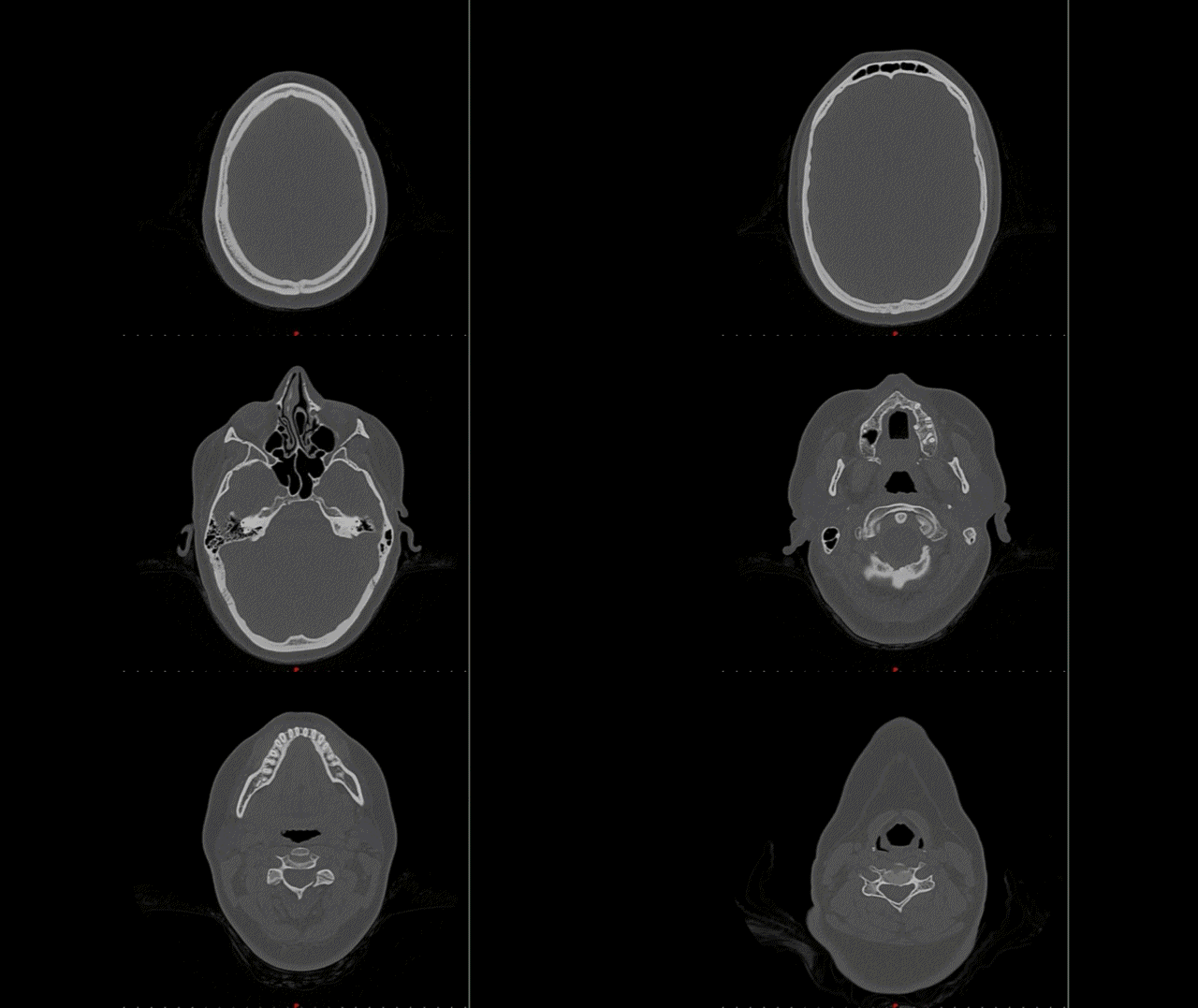
The short answer is that it’s exactly what it sounds like — it’s one specific medical procedure that’s designed for one specific patient. Patient-specific surgical approaches may include surgical cutting guides and/or manufactured implants, and they fit the patient and the procedure perfectly because they are designed based on CT or MRI scans of the patient. In short, everything about a patient-specific procedure is 100% customized to the patient’s anatomy, including patient-specific anatomic models, cutting guides, guides for the placement of bones and plates, pins, and implants that address and restore a patient’s bony anatomy.
Is “patient-specific” the same thing as “custom”?
“Custom” and “Customized” are terms that are often used out of habit. When the terms are used informally, they can refer to a cutting guide, fixation plate, or an implant that is not truly custom but rather is either adjustable or comes in several sizes. Many products advertised as providing “custom” or “customized” fit aren’t actually 100% matched to one specific patient’s anatomy. MedCAD believes a truly custom device and plan are always uniquely specific to one patient and procedure.
Why does a “truly custom” approach help yield better results?
If a procedure hasn’t been planned specifically for one patient, the surgical team may need to make an off-the-shelf product fit the needs of the patient. They may need to spend extra time bending or cutting plates, measuring screw lengths, or unnecessarily cutting away good bone to accommodate an off-the-shelf plate. It’s not uncommon for surgical teams to have different sizes of implants ready to use during surgery, which then have to be “tried on” to see which of two or three options fits better though not perfectly. This all adds time and difficulty to the surgical process. A truly custom guide or implant provides a pre-determined, precise fit that is specifically suited for the one patient’s anatomy. This helps saves time, enhance precision, and ensure that outcomes match the planned goals.
Is a patient-specific approach needed for every surgery?
MedCAD believes that the patient and their surgeon should always have the option to consider patient-specific customized approaches along with off-the-shelf approaches. Certain high-volume procedures — such as many knee and hip replacements — are relatively straightforward and are performed so often that a truly custom approach may not be a first choice. However, in many situations, a truly custom approach offers clear benefits for surgeon and patient. If there is damage from trauma or disease or a need to perform a complicated revision surgery, then patient-specific approaches can help make sure that guides and implants fit perfectly while preserving the maximum amount of healthy bone. And in parts of the anatomy where movement is to be restored, a patient-specific approach offers the most comprehensive three-dimensional approach to restoring a full range of movement.
How can I find out if a patient-specific approach is best for my upcoming surgery?
A doctor who is practiced in patient-matched medicine can help you determine the proper approach for your surgery after a thorough examination that includes high-resolution medical imaging. Ask your surgeon about truly custom approaches, and research all options as you prepare for your decision to undergo surgery.