
Supporting a Remarkable Recovery: Teen Nearly Died After Falling from 3rd-Floor Balcony. Then Doctors Rebuilt His Skull with 3D Printer: ‘Miracle’
Written by: Vanessa Etienne | Published July 17, 2026
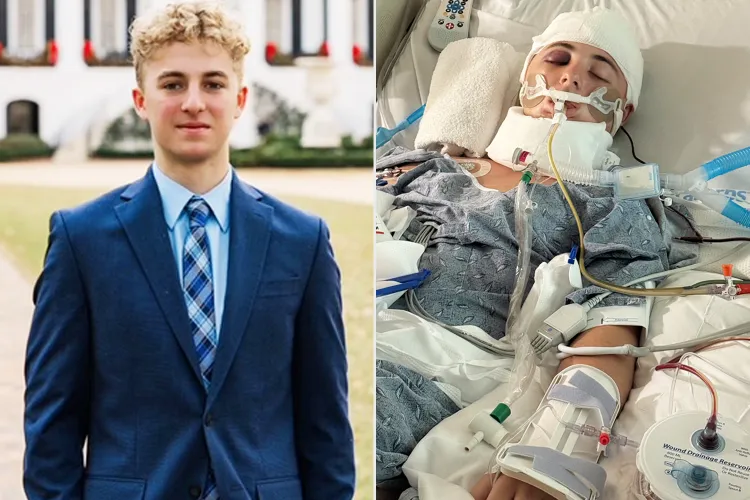
Matthew Polaski before and during treatment for his injury. Credit: Polaski Family; Hackensack Meridian Health
In a recent PEOPLE magazine article, MedCAD’s patient-specific cranial implant technology played a critical role in 18-year-old Matthew Polaski’s recovery. The article share’s his story following a near-fatal three story fall that left him with severe skull fractures and a traumatic brain injury. It also highlights MedCAD’s collaboration with neurosurgeon Nitesh V. Patel, MD, director of the Neurosurgical Oncology program at Jersey Shore University Medical Center.
A Breakthrough Approach to Cranial Reconstruction
After an emergency surgery and weeks of intensive rehabilitation, Matthew faced the final stage of his recovery: reconstructing the portion of his skull that had been critically damaged. Due to the complexity of his injuries, traditional reconstruction methods were not sufficient, leading to his surgical team to pursue a patient-specific solution.
“How do we fix that? How do we do it in a cosmetic way so that he can go on, live a normal life and when he looks in the mirror still feel like Matthew…” – Dr. Nitesh Patel
Using advanced imaging and design technology, MedCAD worked closely with Dr. Patel to develop a custom cranial implant precisely tailored to Matthew’s anatomy. The implant, 3D printed from a durable, medical grade material, was successfully used to reconstruct his skull- helping restore structural integrity while also supporting a natural cosmetic outcome. Today, Matthew’s recovery has exceeded expectations; he is preparing to return to the University of Alabama this fall, marking a significant milestone in his recovery.
Matthew’s story underscores the life-changing impact of patient-specific cranial implants in modern neurosurgery. MedCAD’s custom solutions provide a reliable option when traditional methods fall short – offering precision, durability, and improved outcomes for patients facing complex cranial defects.
Related: Meet the Surgeon: Dr. Nitesh Patel